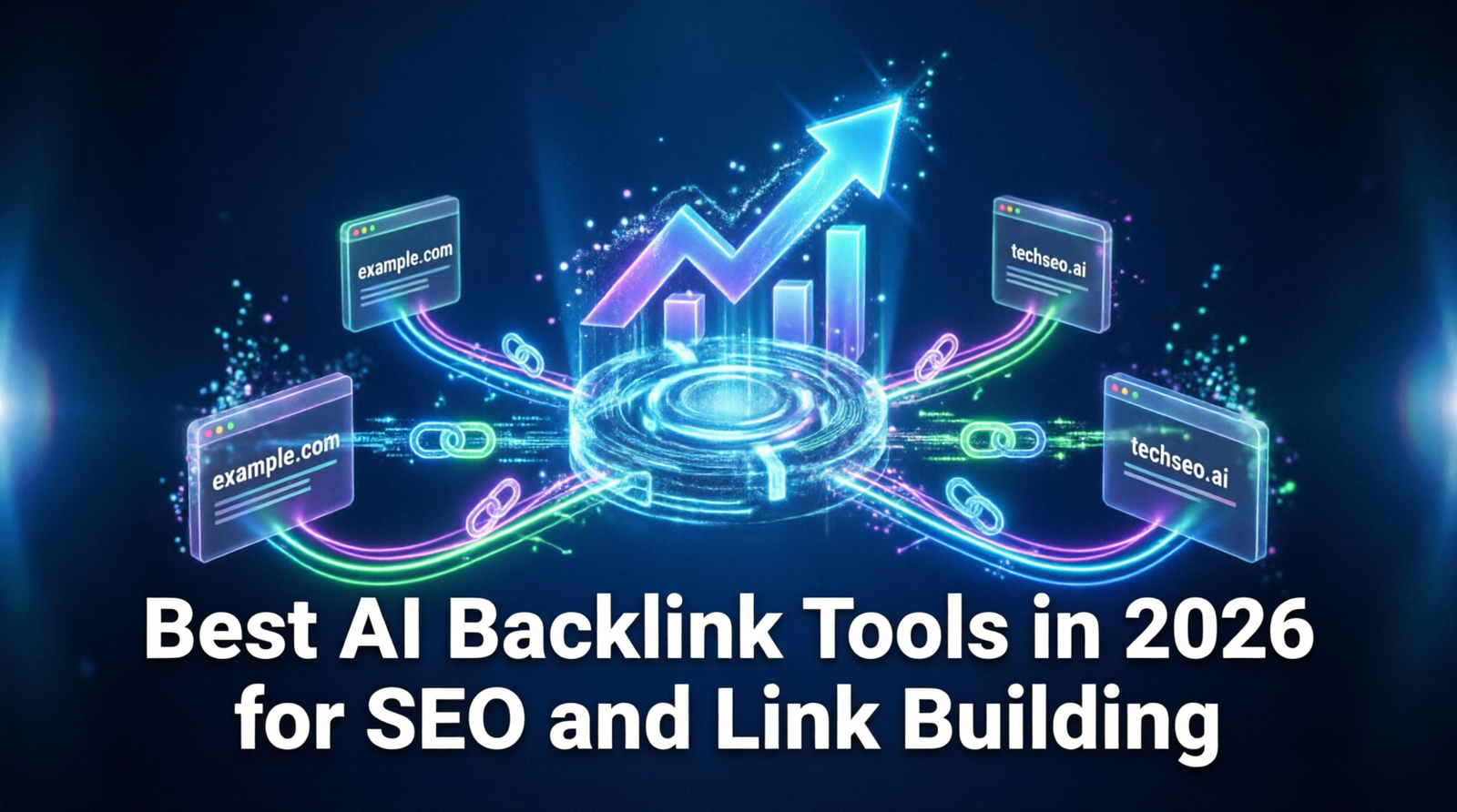
Best AI Backlink Tools in 2026: 5 Powerful Tools for Smarter Link Building
Last updated: September 11, 2026
Building backlinks in 2026 is less about sending thousands of emails and more about finding the right opportunities, understanding why a site might link to you, and creating something genuinely worth referencing.
AI can make parts of that process faster. Modern link-building platforms can help with competitor backlink research, prospect discovery, contact finding, outreach personalization, campaign management, and backlink monitoring.
But there is an important distinction: an AI backlink tool does not create authority by itself.
The quality of the websites you target, the usefulness of your content, the relevance of the link, and the reason another publisher would want to reference your page still matter.
In this guide, we compare five tools that approach link building from different angles:
- Ahrefs — best for backlink intelligence and competitor research
- Semrush — best for an integrated SEO and link-building workflow
- Respona — best for AI-assisted outreach
- Pitchbox — best for agencies and large outreach campaigns
- Majestic — best for specialized link intelligence
Editorial note: This comparison focuses on the capabilities publicly documented by the tool providers. Features and pricing can change, so check the linked official product pages before making a purchase.
Quick Comparison
| Tool | Best for | Backlink research | Outreach | Competitor research | AI-assisted features |
|---|---|---|---|---|---|
| Ahrefs | Backlink intelligence | Excellent | Limited compared with dedicated outreach platforms | Excellent | Some AI and automation features |
| Semrush | All-in-one SEO and link building | Excellent | Strong | Excellent | Strong |
| Respona | Outreach and prospecting | Good | Excellent | Good | Excellent |
| Pitchbox | Agencies and large campaigns | Good | Excellent | Good | Excellent |
| Majestic | Specialized backlink research | Excellent | Limited | Strong | Limited compared with outreach-focused tools |
The biggest difference between these platforms is where they fit in the link-building workflow.
Ahrefs and Majestic are primarily research and link-intelligence platforms. Respona and Pitchbox are much more focused on prospecting and outreach. Semrush sits somewhere in between by combining broader SEO research with dedicated link-building workflows.
What Are AI Backlink Tools?
The term AI backlink tool can describe several different types of software.
Some platforms use AI to help identify promising link opportunities or personalize outreach. Others primarily provide backlink databases and add automation or AI features around the research process.
A typical workflow might look like this:
Competitor research → Find relevant websites → Evaluate opportunities → Find contacts → Personalize outreach → Follow up → Monitor acquired links
AI can reduce the amount of repetitive work involved in that process.
For example, it may help summarize a prospect’s website, generate a first draft of an outreach email, organize prospects, or identify patterns in backlink data.
However, automation should not replace editorial judgment.
A website with a strong SEO metric is not automatically a good prospect. The most useful question is usually:
“Would this link make sense to a real reader?”
If the answer is no, the prospect probably deserves a lower priority.
How We Evaluated These Backlink Tools
Rather than assigning arbitrary star ratings, we evaluated the platforms according to the role they play in a real link-building workflow.
1. Backlink intelligence
How useful is the platform for discovering referring domains, linking pages, anchor text, lost links, and other backlink information?
2. Competitor research
Can you investigate competitors and identify websites or pages that already link to them?
3. Opportunity discovery
Does the platform help you identify realistic prospects rather than simply producing a large list of websites?
4. Outreach capabilities
Can you find contacts, personalize emails, manage follow-ups, and organize campaigns?
5. Automation and AI
Does AI reduce repetitive work without encouraging low-quality mass outreach?
6. Reporting and monitoring
Can you track campaigns or monitor whether acquired backlinks remain active?
7. Overall fit
Instead of asking which tool is universally “best,” we considered which type of user benefits most from each platform.
This matters because the best backlink research tool and the best outreach tool are not necessarily the same product.
1. Ahrefs — Best for Backlink Intelligence
Ahrefs is one of the strongest choices if your primary goal is to understand who links to a website, which pages attract backlinks, and where competitors are gaining links.
Its Site Explorer provides backlink and competitor research, while its backlink reports can be used to examine referring domains, linking pages, anchor text, broken links, and other parts of a site’s link profile.
Ahrefs also provides a free backlink checker that exposes a limited view of its backlink data, making it possible to inspect a domain before committing to a paid plan.
Why Ahrefs stands out
The major strength of Ahrefs is research depth.
Suppose a competitor is ranking above your website for an important topic. Instead of guessing how they acquired authority, you can investigate their backlink profile and look for patterns.
For example, you might discover:
- Industry publications linking to their research
- Resource pages referencing their guides
- Websites linking to similar content
- Broken pages that previously attracted links
- Content formats that consistently earn references
- Websites linking to several competitors but not to you
That turns backlink building into a research problem rather than a simple outreach-volume problem.
Ahrefs also provides reports for finding highly linked pages and broken pages that can be useful when developing link-building campaigns.
Key features
- Backlink profile analysis
- Referring-domain research
- Competitor backlink analysis
- New and lost backlink monitoring
- Anchor-text analysis
- Broken-link research
- Best-by-links research
- Link opportunity discovery
- Domain Rating (DR)
- URL Rating (UR)
- Organic and competitive research
Ahrefs’ own documentation also positions Site Explorer as a competitor research tool covering organic search, backlinks, and other discovery channels.
What Ahrefs is best at
Use Ahrefs when your biggest question is:
“Where are the links in my industry coming from, and which opportunities should I investigate?”
It is particularly useful for:
- SEO professionals
- Affiliate websites
- Content marketers
- SaaS companies
- E-commerce businesses
- SEO agencies
- Competitor research
Limitations
Ahrefs is not primarily an outreach CRM.
If your main challenge is managing thousands of prospects, sending personalized campaigns, handling replies, and organizing outreach workflows, a dedicated outreach platform may be a better fit.
Bottom line
Ahrefs is the strongest choice in this list for backlink intelligence and competitor research.
2. Semrush — Best for an Integrated SEO and Link-Building Workflow
Semrush is a broader SEO platform that combines backlink research with other SEO capabilities.
Its link-building ecosystem includes backlink analysis, backlink-gap research, backlink auditing, and outreach-related tools.
One particularly relevant product is AI Backlink Builder, which Semrush describes as a tool for automating link building, finding contacts, and personalizing outreach with AI. The product is developed by Respona.
Why Semrush stands out
Semrush is useful when you don’t want your link-building process completely separated from the rest of your SEO workflow.
A campaign can start with competitor research, move into backlink-gap analysis, identify prospects, and then transition into outreach.
That makes the platform attractive to businesses and agencies that want several SEO functions under one ecosystem.
AI Backlink Builder
Semrush’s AI Backlink Builder is particularly relevant to this article because it focuses directly on the acquisition side of link building.
According to Semrush’s current product page, it can help:
- Find link-building opportunities
- Find relevant contacts
- Personalize outreach
- Automate parts of the outreach process
Semrush currently lists a 7-day free trial followed by $169/month for the AI Backlink Builder product. Because pricing can change, verify the current price before subscribing.
Key strengths
- Backlink analysis
- Competitor backlink research
- Backlink Gap
- Backlink auditing
- Link-building workflows
- Contact discovery
- AI-assisted personalization
- Outreach automation
- Broader SEO ecosystem
Who should use Semrush?
Semrush is particularly suitable for:
- SEO agencies
- Marketing teams
- Businesses with multiple SEO needs
- E-commerce websites
- Professional SEO consultants
- Teams that want SEO and link building in one ecosystem
Limitations
The platform contains a large number of features, which can be overwhelming for beginners.
It can also become expensive when you combine multiple advanced tools or subscriptions.
Bottom line
Choose Semrush if you want backlink research to be part of a broader SEO and marketing workflow rather than using a dedicated backlink platform alone.
3. Respona — Best for AI-Assisted Outreach
Respona takes a different approach from traditional backlink databases.
Its core strength is the process of finding prospects and turning those prospects into outreach opportunities.
The platform is designed around activities such as prospect discovery, contact finding, personalized outreach, follow-ups, and campaign management.
It also powers Semrush’s AI Backlink Builder.
Why Respona stands out
Finding a website that could link to you is only one part of link building.
You also need to determine:
- Who should receive the email?
- Why would they care about your content?
- Which page should you mention?
- What makes your resource better or different?
- When should you follow up?
- How should you manage replies?
Respona focuses heavily on these operational parts of the process.
That makes it particularly interesting for businesses that already know what type of backlinks they want but need a better system for prospecting and outreach.
AI-assisted workflow
AI can help reduce repetitive work around personalization and prospect research.
But there is an important distinction between:
AI-assisted personalization
and
mass-producing generic emails.
The first can save time while preserving relevance. The second can create low-quality outreach at a much larger scale.
For sustainable campaigns, human review remains important.
Respona’s link-building approach
Respona also offers a broader link-building service in addition to its software workflow.
Its current published pricing for done-for-you placements starts at $100 per placement for its Starter tier, with higher tiers priced according to publisher quality and other criteria. This is a link acquisition service rather than simply the cost of software access, so it should not be confused with a standard SaaS subscription.
Best for
- Outreach specialists
- Link-building agencies
- SaaS businesses
- Digital PR teams
- Content marketing teams
- Businesses actively pursuing editorial mentions
Limitations
Respona is not designed to replace the deepest backlink databases available.
If your first priority is analyzing a competitor’s entire backlink profile, Ahrefs or another specialized research platform may be more appropriate.
Bottom line
Respona is a strong choice when the hardest part of your link-building process is finding prospects and managing personalized outreach.
4. Pitchbox — Best for Agencies and Large Outreach Campaigns
Pitchbox is built specifically around link building, outreach, and digital PR workflows.
It is especially interesting for agencies and teams managing a large number of campaigns because it combines prospecting, outreach, CRM-style organization, reporting, and link monitoring.
Pitchbox says its platform supports more than 20 prospecting methods, including SERP-based searches, topic searches, data imports, and integrations with SEO tools such as Ahrefs and Semrush.
What makes Pitchbox different?
Pitchbox is less about being a giant backlink database and more about operationalizing outreach.
That distinction matters.
A large agency might need to manage:
- Multiple clients
- Multiple campaigns
- Different email accounts
- Thousands of prospects
- Follow-up sequences
- Contact information
- Link status
- Team permissions
- Client reporting
Pitchbox is designed around this type of workflow.
AI features
The current platform includes AI personalization, an AI Campaign Assistant, and an AI Reply Agent.
Its AI Reply Agent can assist with replies and follow-ups, with controls that allow users to decide how much automation they want.
Current pricing
Pitchbox currently lists:
- Pro: $300/month
- Advanced: $600/month
- Scale: $1,200/month
The company also lists lower effective monthly prices for annual billing and states that annual plans save 30%. The plans differ substantially in users, workspaces, campaigns, outreach volume, prospecting searches, and other limits.
That makes Pitchbox a serious professional platform rather than a lightweight beginner tool.
Best for
- Link-building agencies
- SEO agencies
- Digital PR teams
- Large marketing teams
- Businesses running multiple outreach campaigns
Limitations
The price and workflow complexity make it difficult to justify for a small website that only needs a few backlinks.
Bottom line
Pitchbox makes the most sense when link building is an ongoing operation involving multiple campaigns, clients, or team members.
5. Majestic — Best for Specialized Backlink Research
Majestic has a different position in the SEO market.
Instead of trying to be an all-purpose marketing platform, it has historically specialized in link intelligence and backlink analysis.
Its best-known metrics include Trust Flow and Citation Flow.
Majestic describes Trust Flow as a metric intended to estimate the quality of a site’s backlinks, while Citation Flow focuses more on the quantity and influence of links within its link network.
Why Majestic is useful
If your work involves detailed backlink analysis, Majestic provides a specialized set of tools for investigating link relationships.
Its platform includes:
- Trust Flow
- Citation Flow
- Topical Trust Flow
- Referring domains
- Link analysis
- Link graphs
- Competitor link research
- Historical data on higher-tier plans
One particularly useful feature for competitive research is the ability to identify sites that link to competitors but not to your site.
Understanding Trust Flow and Citation Flow
These metrics should not be treated as Google ranking scores.
They are proprietary third-party measurements created by Majestic.
Trust Flow is designed around the quality of backlink relationships, while Citation Flow is more concerned with the quantity and influence of links. Majestic recommends using its Flow Metrics together with broader backlink analysis rather than treating one number as a definitive measure of quality.
This is an important distinction because third-party SEO metrics are useful for research, but they are not direct measurements of how Google will rank a page.
Current pricing snapshot
Majestic currently lists its Lite plan at £39.99 per month, with features including Site Explorer, Trust Flow, Citation Flow, bulk domain analysis, and Link Graph. Its Pro plan adds features such as historical data and competitor backlink-gap research.
Best for
- SEO professionals
- Backlink specialists
- Agencies
- Competitive link research
- Link-focused SEO campaigns
Limitations
Majestic is more specialized than all-in-one SEO platforms.
If you need extensive content, keyword, technical SEO, and outreach functionality in one interface, another platform may be a better fit.
Bottom line
Majestic is worth considering when backlink and link-network analysis is the main job rather than one small part of a broader marketing platform.
Ahrefs vs Semrush vs Respona vs Pitchbox vs Majestic
The right choice depends on where your biggest bottleneck is.
| If your main problem is… | Consider |
|---|---|
| Understanding competitor backlinks | Ahrefs |
| Running broader SEO + link-building campaigns | Semrush |
| Personalizing and managing outreach | Respona |
| Managing large outreach operations | Pitchbox |
| Specialized link intelligence | Majestic |
This also means you don’t necessarily need to choose only one.
For example, an agency might use a backlink intelligence platform to research opportunities and an outreach platform to manage campaigns.
The best stack depends on campaign size, budget, and workflow.
How to Build Better Backlinks With These Tools
Software can make link building more efficient, but the underlying strategy remains more important than the tool.
1. Start With Pages Worth Linking To
Before looking for hundreds of prospects, ask:
What would make another website want to reference my page?
Good linkable assets can include:
- Original research
- Industry statistics
- Data studies
- Useful calculators
- Free tools
- Detailed tutorials
- Templates
- Original surveys
- Expert analysis
- Definitive resource pages
A weak page does not become link-worthy simply because an AI tool finds 10,000 prospects.
2. Study Competitors
Competitor backlink analysis can reveal patterns that would otherwise take months to discover.
Look for websites that:
- Link to multiple competitors
- Reference similar resources
- Publish industry statistics
- Maintain resource pages
- Regularly publish expert content
- Cover your specific topic
The goal isn’t to copy your competitor’s backlink profile.
The goal is to understand why those websites linked to them.
3. Prioritize Relevance
Don’t evaluate prospects using only a domain-level SEO metric.
Consider:
- Topic relevance
- Page relevance
- Real readership
- Organic visibility
- Editorial standards
- Link placement
- Content quality
- The reason the publisher would want to reference you
A smaller but highly relevant publication may be a better prospect than a large general website.
4. Personalize the Outreach
A good outreach email should answer one question quickly:
Why should this person care about my resource?
Instead of:
“We have a great article and would love a backlink.”
Explain the specific value.
For example:
“Your guide covers X, but it doesn’t currently include Y. We recently published original data on Y that may give your readers a useful additional reference.”
The exact wording will depend on the situation, but the principle is consistent: make the pitch about the publisher and their audience, not just your backlink.
5. Use AI as an Assistant
AI is useful for:
- Summarizing prospect websites
- Extracting relevant topics
- Creating first-draft outreach
- Suggesting personalization angles
- Organizing prospect lists
- Classifying opportunities
But review important outreach manually.
A human should decide whether the prospect is genuinely relevant.
6. Monitor the Links You Earn
Acquiring a backlink is not always the end of the process.
Pages can be removed, URLs can change, links can disappear, and websites can change ownership or content.
Regular backlink monitoring helps you understand whether important links remain active.
Are AI Backlink Tools Safe?
AI-assisted link building can be useful, but automation does not make manipulative link building safe.
Google’s current spam policies identify practices such as buying or selling links for ranking purposes, excessive link exchanges, automated programs that create links, and other tactics designed primarily to manipulate ranking signals as link spam.
That does not mean every use of automation is prohibited.
The important distinction is what the automation is being used to accomplish.
Using AI to:
- Research prospects
- Organize data
- Draft an email
- Personalize legitimate outreach
- Monitor backlinks
is very different from using automation to manufacture thousands of artificial links.
A useful principle is:
Use AI to improve research and communication, not to manufacture artificial authority.
For paid advertising or sponsorship arrangements, Google also distinguishes legitimate commercial links from links intended to pass ranking credit; paid links should be appropriately qualified, such as with nofollow or sponsored where applicable.
Common Backlink-Building Mistakes
Mistake 1: Buying cheap bulk backlinks
A package promising hundreds or thousands of backlinks may sound attractive, but quantity alone says very little about usefulness.
Investigate where the links will come from and why those websites would legitimately reference your content.
Mistake 2: Measuring everything with DR or similar metrics
Domain Rating, Authority Score, Trust Flow, and other third-party metrics are useful for comparison.
They are not Google ranking scores.
Use them as screening tools, not as the final decision.
Mistake 3: Sending the same AI email to everyone
Automation can increase output while decreasing quality.
A personalized message to 20 relevant prospects can be more useful than a generic message sent to 2,000 websites.
Mistake 4: Ignoring the linking page
Don’t evaluate only the domain.
Ask:
- Which page will contain the link?
- Is that page relevant?
- Does it receive real search traffic?
- Is the page editorial?
- Will the link help the reader?
Mistake 5: Chasing links instead of improving content
If your content isn’t genuinely useful, better prospecting software won’t solve the underlying problem.
Create something worth citing first.
Mistake 6: Assuming every competitor backlink is reproducible
A competitor may have earned a link because of:
- An original study
- A personal relationship
- A news event
- A unique product
- An interview
- A partnership
- A resource that no longer exists
Competitor research should generate hypotheses, not guarantee identical results.
Advantages and Disadvantages of AI Backlink Tools
Advantages
- Faster backlink research
- Easier competitor analysis
- Better prospect organization
- Faster contact discovery
- AI-assisted personalization
- Outreach automation
- Campaign management
- Backlink monitoring
- Better identification of link opportunities
Disadvantages
- Premium platforms can be expensive
- AI-generated outreach can become repetitive
- Automation can encourage low-quality campaigns
- Third-party backlink metrics are estimates, not Google scores
- Tools cannot guarantee publishers will link to you
- Good link building still requires strong content and editorial judgment
Do Backlinks Still Matter in 2026?
Backlinks remain part of how search engines discover and evaluate relationships between pages and websites, but counting links is not a sufficient SEO strategy.
The more useful question is:
What does this backlink represent?
A relevant editorial citation from a respected publication can be meaningful because it connects your content to a real topic, audience, and source.
By contrast, hundreds of unrelated links created primarily to manipulate rankings can create little sustainable value and may violate Google’s spam policies.
That is why modern link building should focus on earning useful references, not simply increasing a backlink counter.
Frequently Asked Questions
What are AI backlink tools?
AI backlink tools are SEO or outreach platforms that use artificial intelligence and/or automation to help with backlink research, prospecting, contact discovery, personalization, campaign management, or monitoring.
Not every tool marketed as an AI backlink tool is primarily AI-powered. Some are traditional SEO platforms that have added AI-assisted features.
Which AI backlink tool is best?
There is no single best tool for every situation.
Ahrefs is the strongest choice in this comparison for backlink intelligence and competitor research.
Semrush is a strong option for a broader SEO and link-building workflow.
Respona is better suited to AI-assisted outreach.
Pitchbox is designed for larger outreach operations.
Majestic is particularly useful for specialized link intelligence.
Which tool is best for backlink analysis?
For deep backlink research, Ahrefs is our preferred choice from this list.
Its backlink reports and Site Explorer are designed specifically to investigate backlink profiles, referring domains, linking pages, competitor links, and related SEO data.
Which tool is best for link-building outreach?
If outreach is the primary requirement, Respona and Pitchbox deserve the most attention.
Respona emphasizes prospecting and personalized outreach, while Pitchbox is particularly well suited to larger campaigns and agency workflows.
Can AI automatically build backlinks?
AI can automate parts of the link-building process, such as finding prospects, identifying contacts, drafting messages, and organizing follow-ups.
It cannot guarantee that a publisher will voluntarily link to your website.
More importantly, using automation to create links at scale for the primary purpose of manipulating search rankings can fall under Google’s link-spam policies.
Are more backlinks always better?
No.
A backlink should be evaluated based on its relevance, context, quality, and the value it provides to users.
A large number of irrelevant or manipulative links is not automatically better than a smaller number of genuinely useful editorial references.
Are Domain Rating and Trust Flow Google ranking factors?
No.
Metrics such as Ahrefs’ Domain Rating and Majestic’s Trust Flow are proprietary third-party metrics.
They can be useful for comparing websites during prospect research, but they should not be treated as direct Google ranking scores. Majestic explicitly describes Trust Flow as its own SEO vendor metric.
Can AI-generated outreach hurt link building?
It can if it results in irrelevant, repetitive, or misleading messages.
The problem is not simply that AI was involved. The problem is poor outreach.
Use AI to assist research and drafting, then make sure the final message is accurate, relevant, and genuinely useful to the recipient.
Should I use more than one backlink tool?
Sometimes.
A research-heavy workflow might use Ahrefs or Majestic to investigate backlinks and competitors, then use Respona or Pitchbox to manage outreach.
However, smaller websites may not need multiple paid platforms.
Start with the bottleneck in your current process rather than buying every tool.
Final Verdict
The best AI backlink tool depends on what part of link building you actually need to improve.
Choose Ahrefs for backlink intelligence
If your priority is competitor backlink research, referring domains, linking pages, and link opportunities, Ahrefs is the strongest overall choice in this comparison.
Choose Semrush for an integrated SEO workflow
If you want backlink research to work alongside a broader SEO platform, Semrush is a strong option. Its AI Backlink Builder adds prospecting, contact discovery, and AI-assisted outreach to the workflow.
Choose Respona for outreach
If your main bottleneck is finding prospects, contacts, and managing personalized outreach, Respona is a better fit than a traditional backlink database.
Choose Pitchbox for large campaigns
If you’re running an agency or managing multiple outreach campaigns, Pitchbox provides a much deeper operational workflow, including prospecting, AI personalization, campaign management, reporting, and link monitoring.
Choose Majestic for specialized link intelligence
If you want a platform focused heavily on link analysis and metrics such as Trust Flow and Citation Flow, Majestic remains a specialist option.
The most important lesson
No backlink tool can manufacture genuine authority for your website.
The strongest long-term approach is to:
- Create something genuinely worth referencing.
- Study how competitors earn relevant links.
- Identify websites with a legitimate reason to cite your content.
- Personalize your outreach.
- Use AI to reduce repetitive work rather than produce spam at scale.
- Monitor the links you earn.
- Prioritize relevance and usefulness over raw backlink counts.
Google’s own guidance emphasizes original, helpful, people-first content rather than content created primarily to manipulate search rankings. Its guidance also encourages publishers to provide original analysis and substantial value rather than simply rewriting information that already exists elsewhere.
The goal of link building should not be to collect as many links as possible. The goal should be to earn references that make sense for your audience and strengthen the usefulness and discoverability of your content.
Official Sources
- Google Search Central — Creating Helpful, Reliable, People-First Content
- Google Search Central — Spam Policies
- Ahrefs — Site Explorer
- Semrush — AI Backlink Builder
- Respona
- Pitchbox — Pricing and Features
- Majestic — Trust Flow
Related Articles
- Best AI SEO Tools in 2026
- Best AI Rank Tracking Tools in 2026
- Best AI GEO Tools in 2026
- Best AI AEO Tools in 2026